
Melbourne doesn’t really do “top 10 attractions.” The best things about this city are scattered across its suburbs, hidden in its laneways, and built into the way people actually live here. You can spend a week in Melbourne and barely scratch the surface, or you can spend a lifetime here and still find a new bar, a new beach, or a new corner that surprises you.
This guide covers everything, from the obvious stuff that first-timers need to know, to the things that only locals tend to find. Whether you’re visiting for a weekend, just moved here, or have been here for years and want something new, this is the page to bookmark.
Melbourne’s Must-See Attractions
Hosier Lane & Melbourne’s Street Art
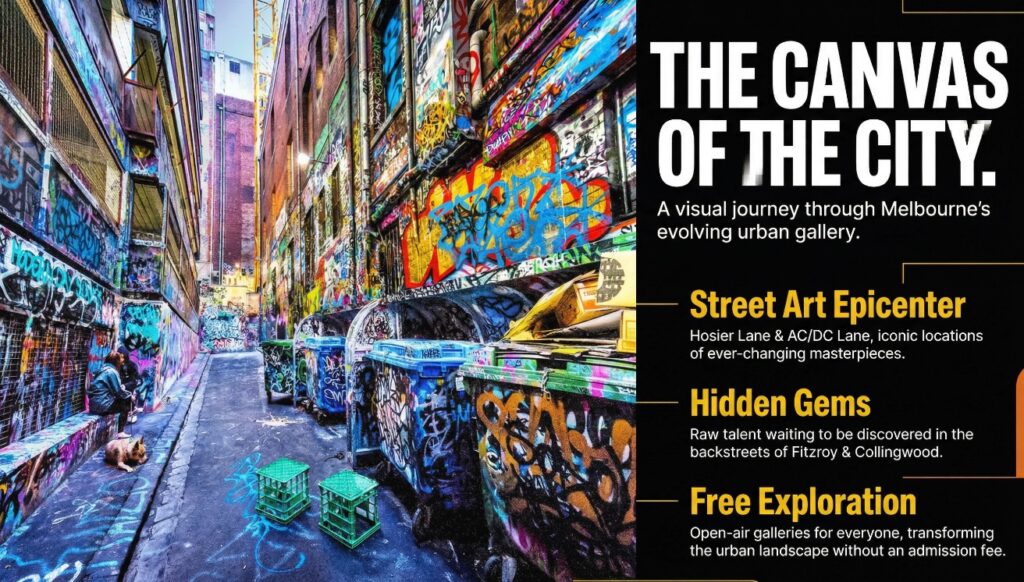
Melbourne’s laneways are famous worldwide, and Hosier Lane is where most people start. The entire alley is covered floor-to-ceiling in street art, stencils, paste-ups, and murals that change constantly. One visit is never the same as the last. From Hosier Lane, loop through AC/DC Lane and Blender Lane. These are within walking distance of each other in the CBD and completely free.
But the best street art isn’t always in the tourist spots. Fitzroy’s back streets, Collingwood’s warehouse walls, and Brunswick’s Sydney Road all have incredible pieces that most visitors never see.

Federation Square & Flinders Street Station
These two landmarks sit right opposite each other and they’re usually the first thing people see when they arrive in the city. Federation Square’s angular design is still divisive (locals either love it or hate it), but it’s home to ACMI (the Australian Centre for the Moving Image), the Ian Potter Centre for Australian art, and a regular lineup of free events in the main plaza.
Flinders Street Station, with its iconic yellow facade and green dome, is Melbourne’s oldest and busiest train station. The corner of Flinders and Swanston Streets is probably the most photographed intersection in the city.
Eureka Skydeck
At 297 metres above ground, Skydeck is the highest viewing platform in the Southern Hemisphere. On a clear day, you can see all the way to the Dandenong Ranges and across Port Phillip Bay. There’s also “The Edge,” a glass cube that slides out from the building with you standing in it. It’s not for everyone, but it’s a rush if you’re up for it. If you’re going, late afternoon is the sweet spot, as you’ll catch both the daylight views and the city lighting up at dusk.
Queen Victoria Market
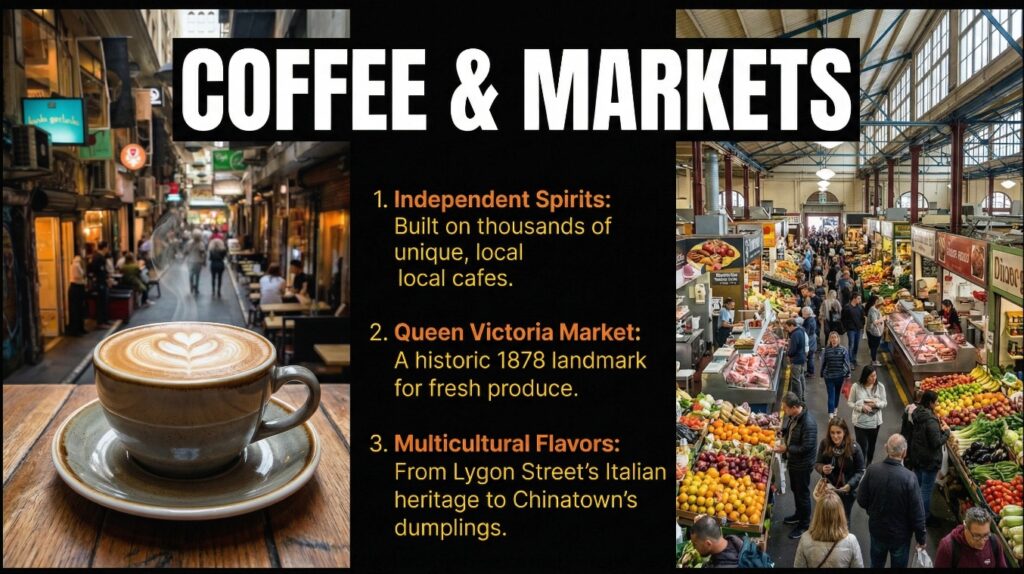
“The Vic Market” has been running since 1878 and it’s still where locals go for fresh produce, meat, deli goods, and random finds. The food halls are the highlight. Grab a bratwurst from the famous hot dog stand, pick up cheese and olives from the deli section, or just wander and sample. On summer Wednesday nights, the Night Market takes over with street food stalls, live music, and bars. It’s one of the best free-entry events in the city.
Royal Botanic Gardens
38 hectares of beautifully maintained gardens right in the heart of the city. It’s the kind of place where you can spend 20 minutes or an entire afternoon. The Ornamental Lake is a great spot for a picnic, and the Aboriginal Heritage Walk is worth doing for a deeper understanding of how the land was used for thousands of years before the city existed.
Free entry, open daily.

Melbourne Museum
The largest museum in the Southern Hemisphere, and it’s free. The Forest Gallery is genuinely impressive, a living indoor rainforest with real trees, birds, and fish. There are excellent permanent exhibitions on Melbourne’s history, First Nations culture, and natural sciences. Allow at least 2-3 hours.
NGV (National Gallery of Victoria)
Australia’s oldest and most visited art gallery, and the permanent collection is free. The NGV International on St Kilda Road houses everything from ancient Egyptian artefacts to contemporary art, while the Ian Potter Centre at Federation Square focuses on Australian art. They always have a major ticketed exhibition running alongside the free collections.
Beaches
Melbourne’s beaches don’t get the same press as Sydney’s, but on a summer day there’s nowhere better to be.
St Kilda Beach
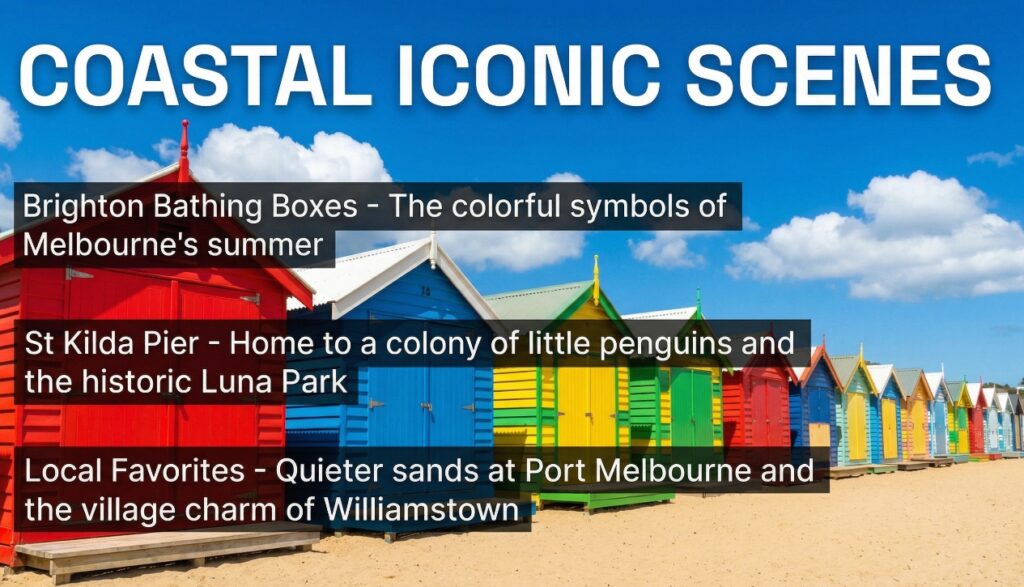
Melbourne’s most famous beach is a 20-minute tram ride from the CBD on the number 96. The beach itself is decent, the foreshore is great for walking and cycling, and the pier has a colony of little penguins that you can spot at dusk. Luna Park, the Esplanade Market (Sundays), and dozens of cafes and bars line the strip. It’s busy on weekends, especially in summer, but that’s part of the charm.
Port Melbourne Beach
Quieter, cleaner, and less crowded than St Kilda. It’s the beach locals go to when they want to actually swim without fighting for space. The Station Pier end has great views back to the city.
Williamstown Beach
A bit further out but absolutely worth the trip, especially on a warm day. Catch the ferry from Southbank for the best approach. Williamstown has a village feel, good fish and chips, and the beach is genuinely lovely.
Brighton Beach
Home to Melbourne’s iconic bathing boxes, those colourful little huts that show up on every postcard and Instagram feed. The beach itself is great, and it’s a nice spot for a swim. Come early morning for photos without the crowds.
Food & Coffee
Melbourne’s food scene is genuinely world-class, and the coffee might be the best in the world. That’s not an exaggeration.
Coffee Culture
Melbourne takes its coffee extremely seriously. Forget chains, the best coffee is at independent cafes, and there are thousands of them. The inner-north (Fitzroy, Collingwood, Brunswick) is ground zero for specialty coffee, but you’ll find excellent flat whites in every suburb. If you’re visiting, skip the big-name cafes and ask a local where they go.
Where to Eat
The city’s multiculturalism means you can eat practically any cuisine at a high level. Victoria Street in Richmond is Melbourne’s Little Saigon, with incredible Vietnamese food at very reasonable prices. Lygon Street in Carlton is the historic Italian quarter, though the best Italian food has now spread across the city. Chinatown, one of the oldest in the Western world, has amazing dumplings, hot pot, and late-night dining.
For fine dining, Melbourne consistently produces some of Australia’s best restaurants. For casual eating, the food truck and laneway dining scene is hard to beat. And for breakfast and brunch, Melbourne is genuinely in a league of its own.
Rooftop Bars
Melbourne has some of the best rooftop bars in Australia. Rooftop Bar on Swanston Street is the original and still one of the best. Naked in the Sky in Fitzroy has incredible views and pintxos. Loop Roof in the CBD is intimate and beautifully designed. In summer, the rooftop scene is at its peak, and you’ll find everything from cocktail lounges to casual beer gardens up above street level.
Neighbourhoods Worth Exploring
Melbourne is a city of neighbourhoods, and each one has its own personality.
Fitzroy
The creative heart of Melbourne. Brunswick Street and Gertrude Street are lined with independent shops, cafes, bars, and galleries. The brunch scene here is arguably the best in the city. Fitzroy also has some of Melbourne’s best street art outside of Hosier Lane.
St Kilda
Beachside suburb with a lively bar and restaurant strip along Fitzroy Street and Acland Street. The Sunday Esplanade Market, Luna Park, and the penguin colony at the pier are all here. It’s a bit more touristy than other suburbs, but it earns it.
Collingwood & Richmond
Just east of the CBD, these neighbouring suburbs have transformed from working-class roots into foodie and nightlife destinations. Smith Street in Collingwood is packed with excellent bars and restaurants. Bridge Road and Swan Street in Richmond offer everything from fine dining to late-night dumplings.
Brunswick
Sydney Road is one of the longest shopping strips in the Southern Hemisphere. It’s a mix of Middle Eastern bakeries, vintage shops, live music venues, and a strong multicultural food scene. The Brunswick Music Festival and the Sydney Road Street Party are annual highlights.
Chinatown
Right in the CBD, Melbourne’s Chinatown is one of the oldest in the Western world, dating back to the 1850s gold rush. The dumpling restaurants, hot pot spots, and late-night supper clubs here are excellent. It’s also where you’ll find some of the best cheap eats in the city centre.
Docklands
Melbourne’s waterfront precinct has grown up a lot in recent years. The Melbourne Star Observation Wheel, The District Docklands shopping centre, and a growing number of restaurants make it worth visiting. It’s particularly good on weekday evenings when the CBD is quieter.
South Melbourne & Southbank
The stretch along the Yarra from Southbank to South Melbourne is where you’ll find the Arts Centre, NGV, Hamer Hall, and a string of restaurants. South Melbourne Market is smaller and more local than Queen Vic, and the dim sims there are legendary.
Free Things to Do
Melbourne is genuinely one of the best cities in the world for free activities.
The free tram zone covers the entire CBD and Docklands, so you can hop on and off without touching your Myki card. The NGV permanent collection, Melbourne Museum, State Library of Victoria, and ACMI are all free. The Royal Botanic Gardens, Fitzroy Gardens, and Carlton Gardens are free and beautiful. Street art walking tours (self-guided) cost nothing. The Yarra River trail is free for walking and cycling, stretching 33km from the bay into the suburbs. And most of Melbourne’s best beaches are free with no entry fees.
Day Trips from Melbourne
Some of Victoria’s best experiences are within a couple of hours’ drive.
Great Ocean Road & the 12 Apostles
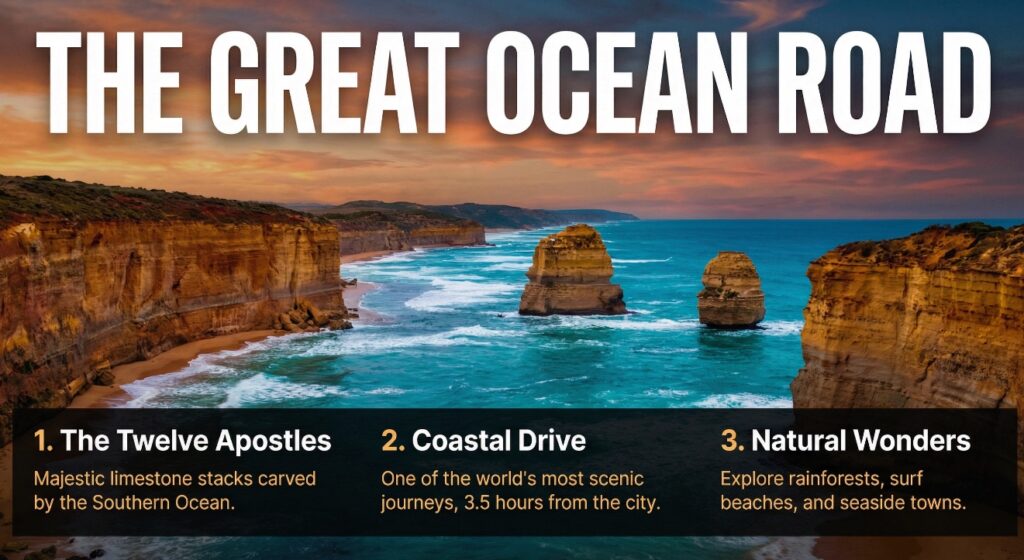
Australia’s most famous coastal drive, about 3.5 hours from Melbourne to the Twelve Apostles. The limestone stacks are incredible, but the entire drive along the coast is the real attraction. Stop at Torquay, Lorne, and Apollo Bay along the way.
Yarra Valley
Victoria’s premier wine region, about an hour from the CBD. Over 80 wineries, excellent restaurants, and beautiful scenery. Healesville Sanctuary (Australian wildlife park) is also out here.
Mornington Peninsula
Beaches, wineries, hot springs, and some of the best coastal walks near Melbourne. The Peninsula Hot Springs are a standout. About 90 minutes from the CBD.
Phillip Island
Famous for the nightly Penguin Parade, where hundreds of little penguins waddle back from the sea to their burrows at dusk. It’s touristy but genuinely special. About two hours from Melbourne.
Dandenong Ranges
Lush rainforest, small towns, and the historic Puffing Billy Railway steam train. Perfect for a cooler day when the beach isn’t calling.
Seasonal Highlights
Melbourne’s events calendar is packed year-round.
Summer (December-February): Australian Open tennis, outdoor cinemas (Moonlight Cinema at the Botanic Gardens), Night Market at Queen Vic, beach season, cricket at the MCG.
Autumn (March-May): Formula 1 Australian Grand Prix (March 5-8, 2026), Melbourne Food & Wine Festival, Melbourne International Comedy Festival, Melbourne Fashion Festival, AFL season kicks off.
Winter (June-August): Rising Festival (arts and culture), Melbourne International Film Festival, cosy bar season. The best time for hot springs and mountain getaways.
Spring (September-November): Melbourne Cup Carnival (horse racing), Melbourne Fringe Festival, Melbourne International Arts Festival, Spring Racing Carnival. The city comes alive with outdoor events as the weather warms up.
Getting Around
Free tram zone: Covers the CBD and Docklands. Jump on any tram within the zone without needing to touch on.
Myki card: Required for all public transport outside the free zone. Buy one at any train station or convenience store, and top up as you go. Daily fare caps mean you won’t overpay.
Trams: Melbourne’s tram network is the largest in the world. The 96 to St Kilda, the 86 through Fitzroy and Collingwood, and the 11 down Brunswick Street are some of the most useful routes.
Cycling: Melbourne is increasingly bike-friendly, with dedicated lanes across much of the inner city.
Driving: Parking in the CBD is expensive and limited. For day trips, a car is essential. For the city itself, public transport is easier.

Melbourne isn’t a city that reveals itself through a checklist of attractions. The best experiences here come from wandering, eating, talking to people, and spending time in the neighbourhoods that make this city what it is. Whether you’re here for a weekend or a lifetime, there’s always something new to find.
This guide is updated regularly. Last updated: February 2026.
Explore more: Valentine’s Day Melbourne 2026 | Best Brunch Spots in Fitzroy | St Kilda Beach Guide (coming soon) | Rooftop Bars Melbourne (coming soon) | Best Cafes Melbourne (coming soon)


